- Teacher: Dr. Eltayeb Eljack
- Teacher: Dr. Elamin Abdelgalil Mahmoud
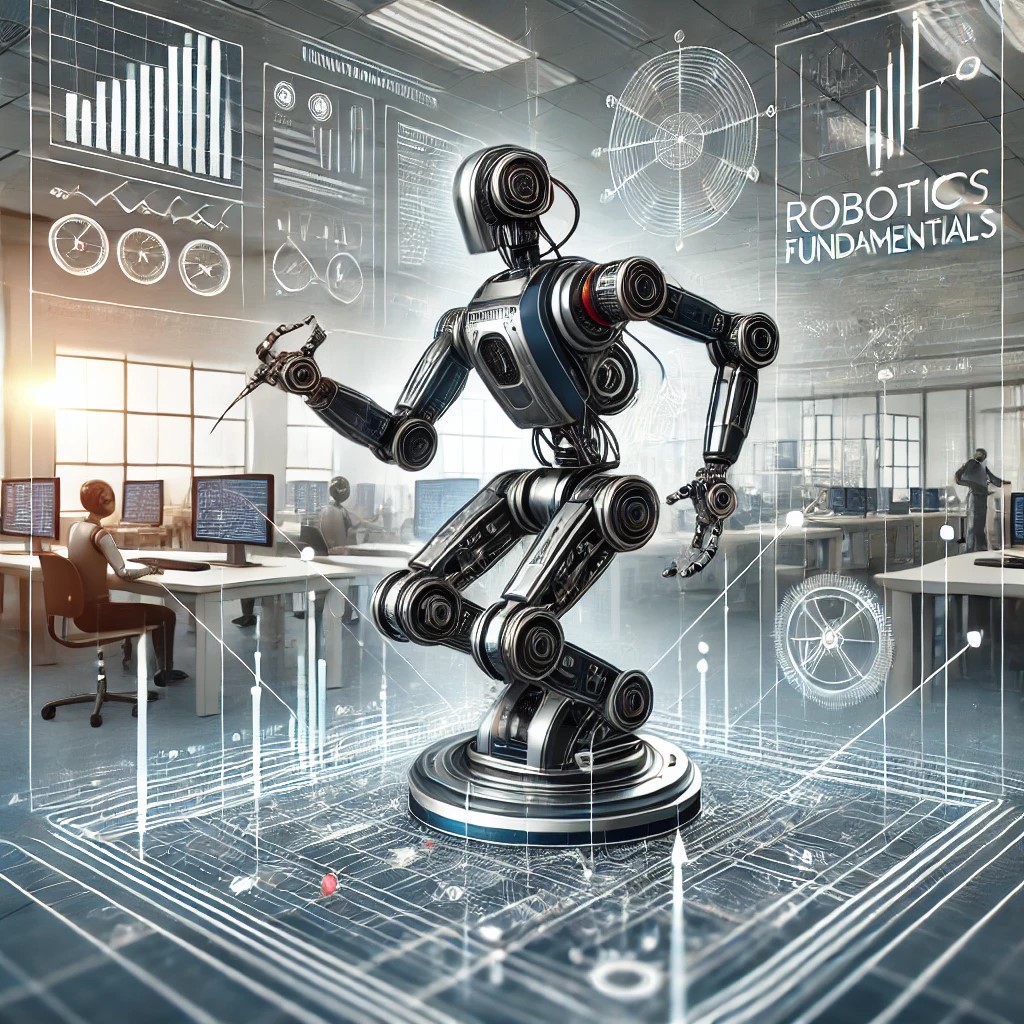
MEE42112: Introduction to Robotics (3 Credits hours) [SO1, SO4, and SO7] History: Classification, components, robot joints, robot workspace, robot characteristics. Robot kinematics: Forward and reverse kinematics, homogeneous transformation, Denavit-Hartenberg representation. Differential motions and velocities: Differential relationships, Jacobian, differential motion of a frame, differential motion of a robot and its hand frame. Dynamic analysis and forces: Lagrangian mechanics, dynamics equations for multiple-degree-of-freedom robots, static force analysis of robot. End-effectors and robot actuators, comparison of actuating system.
- Teacher: Dr. Karameldeen Omer
- Teacher: MS. Nora Ali
The course syllabus include the following topics:
MEE42401: (3 Credits hours) Introduction, Gas vapour mixtures, Psychrometry and Psychrometric processes, vapour compression refrigeration, absorption refrigeration systems,, food refrigeration, transport refrigeration.
Air Conditioning: Human comfort (comfort and comfort zones; indoor air quality). Heat gain-through walls and fenestrations. Cooling load calculations. Calculations using software packages. Refrigerants properties and their selection, Refrigeration equipment and control devices.
MEE42401: (3 Credits hours) Introduction, Gas vapour mixtures, Psychrometry and Psychrometric processes, vapour compression refrigeration, absorption refrigeration systems,, food refrigeration, transport refrigeration.
Air Conditioning: Human comfort (comfort and comfort zones; indoor air quality). Heat gain-through walls and fenestrations. Cooling load calculations. Calculations using software packages. Refrigerants properties and their selection, Refrigeration equipment and control devices.
- Teacher: Prof.Kamal Nasereldin
- Teacher: Ibrahim Idris
- Teacher: Dr. Mahmoud Onsa
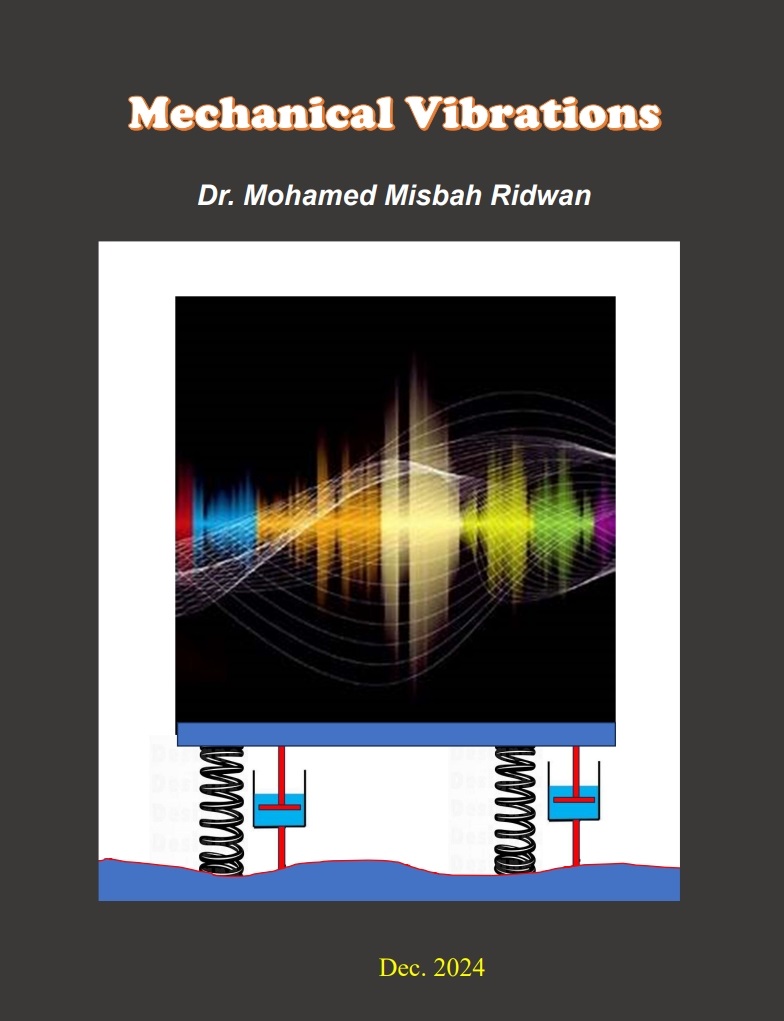
Vibration is the cyclic motion of an object around its equilibrium position. It can be free, self – excited or externally – excited, also can be undamped, damped, critical damping or overdamped. Unwanted vibrations lead to failure, while some vibrations are wanted for some operations involving shaking. Vibration problems start by equations of motion in differential form, then solving these equations analytically or numerically. and analyzing the result to control the design parameters
The objective of the course is to study the fundamentals of the vibrations and to introduce with the computer applications
The objective of the course is to study the fundamentals of the vibrations and to introduce with the computer applications
- Teacher: Dr. Mohammed Misbah